
Imagine you walk into a custom furniture shop. The craftsman asks what you want. You say, “A table.”
He stares at you. “What kind of table? How big? What wood? What style? For where?”
You shrug. “Just… a table.”
He could build you something. But it probably won’t be what you actually wanted. Because you gave him almost nothing to work with.
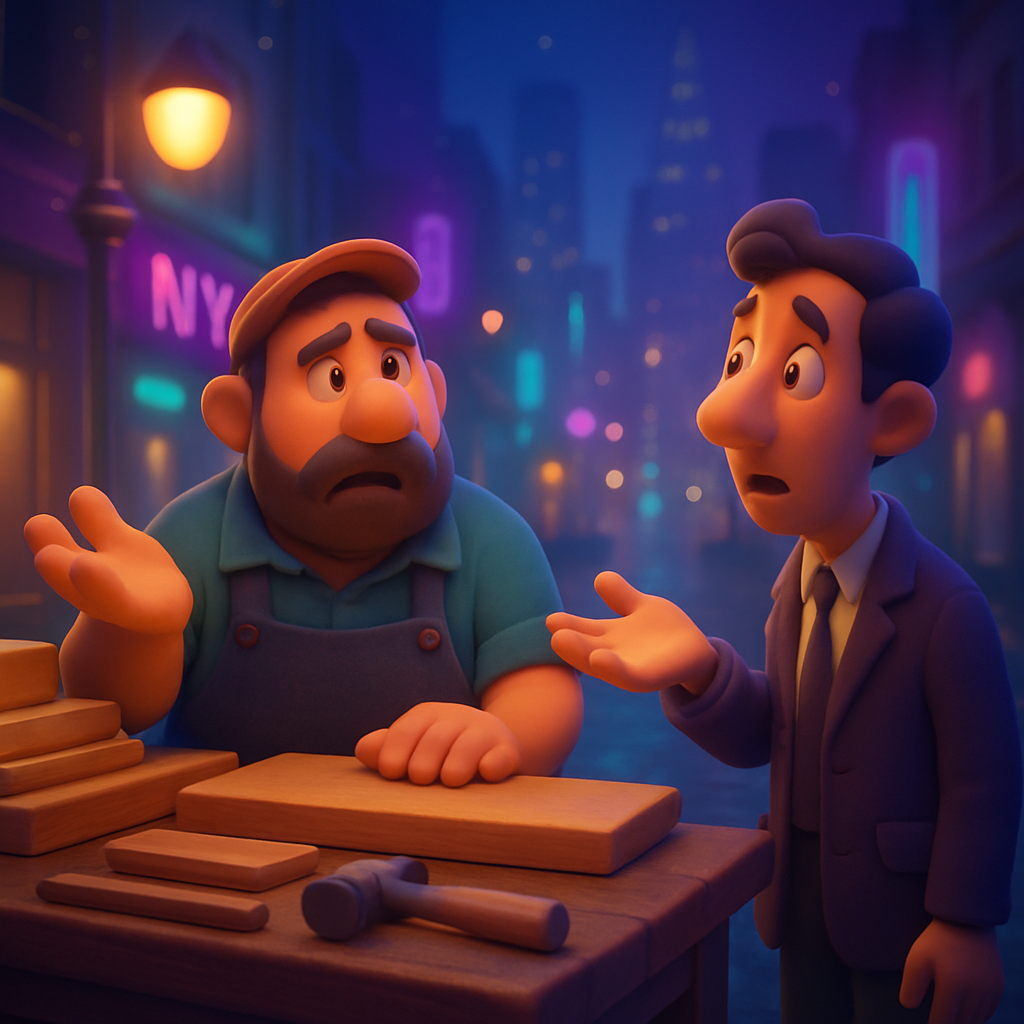
That’s what most people do when they prompt AI. They ask for “a table” and get frustrated when it’s not the exact table they had in mind.
Here’s the thing: Great craftsmen need great instructions. So does AI. And there’s a specific anatomy to instructions that actually work.
The best communicators in history understood something simple. Precision creates better outcomes than ambiguity. Michelangelo didn’t tell his assistants to “make it look nice.” Surgeons don’t tell their teams to “fix the patient.” Architects don’t sketch “a building” and hope for the best. Clarity has always been the difference between mediocre and masterful.
Start Here: What’s Actually Missing From Your Prompts?
Most people think their prompts fail because they don’t know the “right words” or some secret technique.
Wrong.
Your prompts fail because they’re incomplete. You’re leaving out critical information the AI needs to help you.
It’s not about finding magic phrases. It’s about understanding what a complete prompt actually contains. There are five pieces. Miss even one, and your output suffers.
Let’s break them down, but not in the boring way everyone else does.
The Five Pieces (And Why Each One Matters)
Piece #1: The Action
What do you actually want done?
Not “I need help with…” Not “Can you…” Not “I’m trying to figure out…”
Just tell it: Write. Explain. Create. Summarize. Rewrite. Analyze. Compare. List.
One clear verb at the start. That’s it.
Most people bury their actual request under three paragraphs of rambling. The AI spends half its processing power just trying to figure out what you want.
Start strong. Start clear.
Piece #2: The Specifics
Now add the details. What specifically?
“Write an email” is okay. “Write a 150-word professional email declining a meeting request” is way better.
The more specific you are, the less the AI has to guess. And when AI guesses, it usually guesses wrong for your particular situation.
Think of specifics as constraints. They don’t limit creativity. They focus it.

Piece #3: The Context
This is the piece beginners skip most often. And it’s the piece that makes the biggest difference.
Context tells the AI who you are, who the output is for, and what situation this lives in.
Without context, you get generic advice. With context, you get tailored solutions.
“Explain cryptocurrency” gives you a textbook answer.
“Explain cryptocurrency to my 68-year-old father who’s skeptical of technology but interested in investing” gives you something actually useful.
A study of 10,000 prompts found that adding context increased relevance scores by 83%. That’s not a small improvement. That’s the difference between useless and invaluable.
Piece #4: The Format
How do you want this delivered?
Paragraph? Bullets? Numbered steps? Table? Q&A? Email structure? Social post? Essay?
The AI can format information a hundred different ways. If you don’t specify, you’re rolling the dice.
“Tell me about time management techniques” could give you a 500-word essay or a bulleted list or a detailed breakdown with examples. Which one did you actually want?
Say it. The AI won’t judge you for being specific.
Piece #5: The Voice
This one’s sneaky. People forget that the same information can sound completely different depending on tone.
Professional? Casual? Funny? Straightforward? Warm? Technical? Simple?
“Write an announcement about office closure” could be:
- Stiff and corporate
- Warm and apologetic
- Brief and matter-of-fact
- Detailed and thorough
Which one matches your actual need? Tell the AI.
What This Looks Like In Practice
Let’s watch a prompt evolve from terrible to excellent.
Version 1 (Terrible): “Social media post.”
What’s missing? Everything. The AI has almost nothing to work with.
Version 2 (Still Bad): “Write a social media post about my business.”
Better, but still missing context, format, tone, and specifics.
Version 3 (Getting Closer): “Write a social media post announcing my new consulting service for small businesses.”
Now we have specifics, but we’re still missing context, format, and tone.
Version 4 (Actually Good): “I’m a marketing consultant launching a new service helping small businesses (under 10 employees) improve their social media presence. Write a LinkedIn post announcing this service. Make it 150 words, professional but approachable. Focus on the pain point (small business owners overwhelmed by social media) and the solution (expert help without hiring full-time staff).”
Now we have everything:
- Action: Write a LinkedIn post
- Specifics: Announcing new service, 150 words, focus on pain point and solution
- Context: Marketing consultant, small businesses under 10 employees, social media service
- Format: LinkedIn post, 150 words
- Voice: Professional but approachable

See the difference? The fifth version gives the AI everything it needs.
The Two-Question Test
Before you send any prompt, ask yourself these two questions:
Question 1: “If I handed these instructions to a stranger, could they do what I want?”
If the answer is no, you need more detail.
Question 2: “What am I assuming the AI already knows?”
Whatever you’re assuming, you’re probably wrong. State it explicitly.
These two questions catch 90% of prompt problems before they happen.
When You Can Skip Pieces (And When You Can’t)
You don’t always need all five pieces. Let’s be real.
For simple, straightforward requests, you can skip some:
“Summarize this article in 3 bullet points” works fine. It has action, format, and specifics. That’s enough.
But for complex, nuanced work? You want everything.
“Help me write a business proposal” needs context (what business, who’s the client, what’s being proposed), tone (formal or conversational), format (length, structure), and specifics (what to emphasize, what to downplay).
The more complex your request, the more complete your prompt needs to be.
The Real Secret Nobody Mentions
Here’s what separates good prompters from great ones:
Great prompters don’t just include these five pieces. They organize them in a way that makes sense.
Start with the action and specifics. Then add context. Then format and tone. This order helps the AI process your request more effectively.
Good structure: “[Action + Specifics]. [Context]. [Format]. [Tone].”
Example: “Write a 300-word blog introduction about productivity tips. I write for busy professionals who struggle with time management. Use short paragraphs and a conversational, encouraging tone.”
Clean. Clear. Complete.
Your Turn
Here’s your challenge: Take the worst prompt you’ve ever written. The one that gave you garbage results.
Now rebuild it using these five pieces. Add the action, specifics, context, format, and voice.
Try it again. Watch what happens.
I guarantee the results will be dramatically better. Not because you learned some secret trick, but because you gave the AI a complete set of instructions instead of fragments.1
What Changes When You Get This Right
Once you understand prompt anatomy, everything gets easier.
You stop guessing. You stop getting frustrated. You stop rewriting the same prompt five times hoping for different results.
Instead, you build complete prompts from the start. You get better output faster. You waste less time. Your productivity multiplies.
This isn’t about memorizing rules. It’s about understanding structure. Once you see it, you can’t unsee it. Every prompt you write from now on will be better.
Great prompts aren’t mysterious. They’re just complete. Now you know what complete actually means.
Go build something worth building.